Visiting Titanic: The Artifact Exhibition Orlando
Titanic: The Artifact Exhibition in Orlando is a compact, immersive museum experience best known for its original recovered artifacts, recreated first-class rooms, and the massive hull fragment called ‘Little Big Piece’. It’s easy to cover in one visit, but it feels richer if you slow down for the passenger stories instead of treating it like a quick photo stop on International Drive. This guide covers timing, tickets, layout, and what to prioritize.
Quick overview: Titanic: The Artifact Exhibition at a glance
If you want the short version before booking, this is what changes the visit most.
- When to visit: Open daily. Tuesday and Wednesday mornings feel noticeably calmer than weekend afternoons, because most International Drive foot traffic builds later in the day and the recreated rooms feel tighter once the galleries fill up.
- Getting in: From $37 for standard entry. Guided add-ons start at about $5, and booking ahead matters most during school breaks, holiday weeks, and Friday–Saturday evenings when special event demand overlaps with regular admission.
- How long to allow: 1.5–2 hours works for most visitors. It stretches closer to 2.5 hours if you read the passenger stories carefully, add VR, or stop often for photos.
- What most people miss: The smaller personal artifacts and the name on your boarding pass do more of the emotional work than people expect, especially before the final hull-piece gallery.
- Is a guide worth it? Yes if you want deeper context on the ship, wreck recovery, and passenger stories; otherwise, the self-guided route is compact enough to handle well on your own.
Jump to what you need
🕒 Where and when to go
🚢 What happens inside
♿ Facilities and accessibility
Where and when to go

How do you get to Titanic: The Artifact Exhibition
The exhibition sits on Orlando’s International Drive tourist corridor, inside the ICON Park area, about 15 minutes from downtown Orlando and about 10–12 minutes from Universal Orlando Resort by car.
Address: 7324 International Dr, Orlando, FL 32819, United States | Find on Maps
- Car: Paid garages and nearby lots serve the ICON Park area → allow extra time on weekends → there’s no free on-site parking built into a standard visit.
- Rideshare/taxi: Drop-off at the ICON Park entrance → short walk to the exhibit → easiest if you want to avoid parking and evening traffic.
- Bus: Local International Drive bus service stops along the corridor → short walk to the venue → practical if you’re already staying on I-Drive.
- From Orlando International Airport: About 12 miles away → roughly 18 minutes by car in light traffic → best done by taxi or rideshare.
Which entrance should you use
The setup is straightforward: this is a single main entrance experience, not a multi-gate attraction. What catches people out is not the wrong door, but underestimating parking, complex walking time, and check-in during busier afternoon arrivals.
- Main entrance: Located at the front lobby entrance on International Drive. Best for all ticket holders. Expect about 5–15 minutes at the ticket check during weekend afternoons and holiday periods.
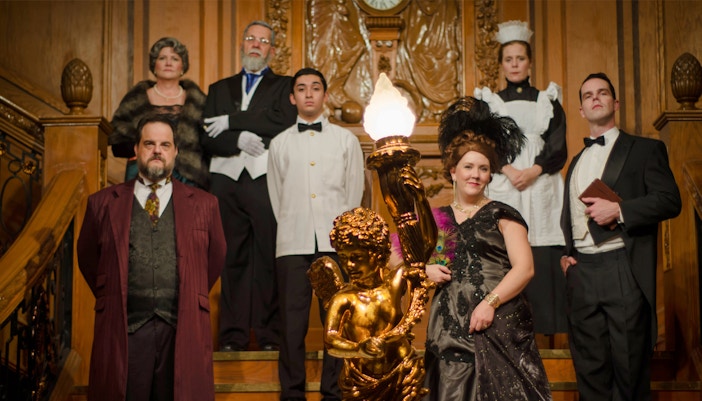
When is Titanic: The Artifact Exhibition open
- Daily: Open every day, with hours that can shift by date on the live calendar.
- Thursday: Often the easiest late visit, with evening hours extending to around 10pm.
- Last entry: A separate cutoff isn’t prominently listed, so give yourself at least 2 hours before closing if you want the full visit without rushing the final galleries.
When is it busiest: Weekend afternoons, school breaks, and holiday weeks feel fullest, and that matters because the recreated rooms and artifact cases are much harder to linger in once groups stack up.
When should you actually go: Aim for a weekday morning before lunch, when the galleries feel easier to move through, and the staged rooms photograph much better without people filling every frame.
What happens inside Titanic: The Artifact Exhibition
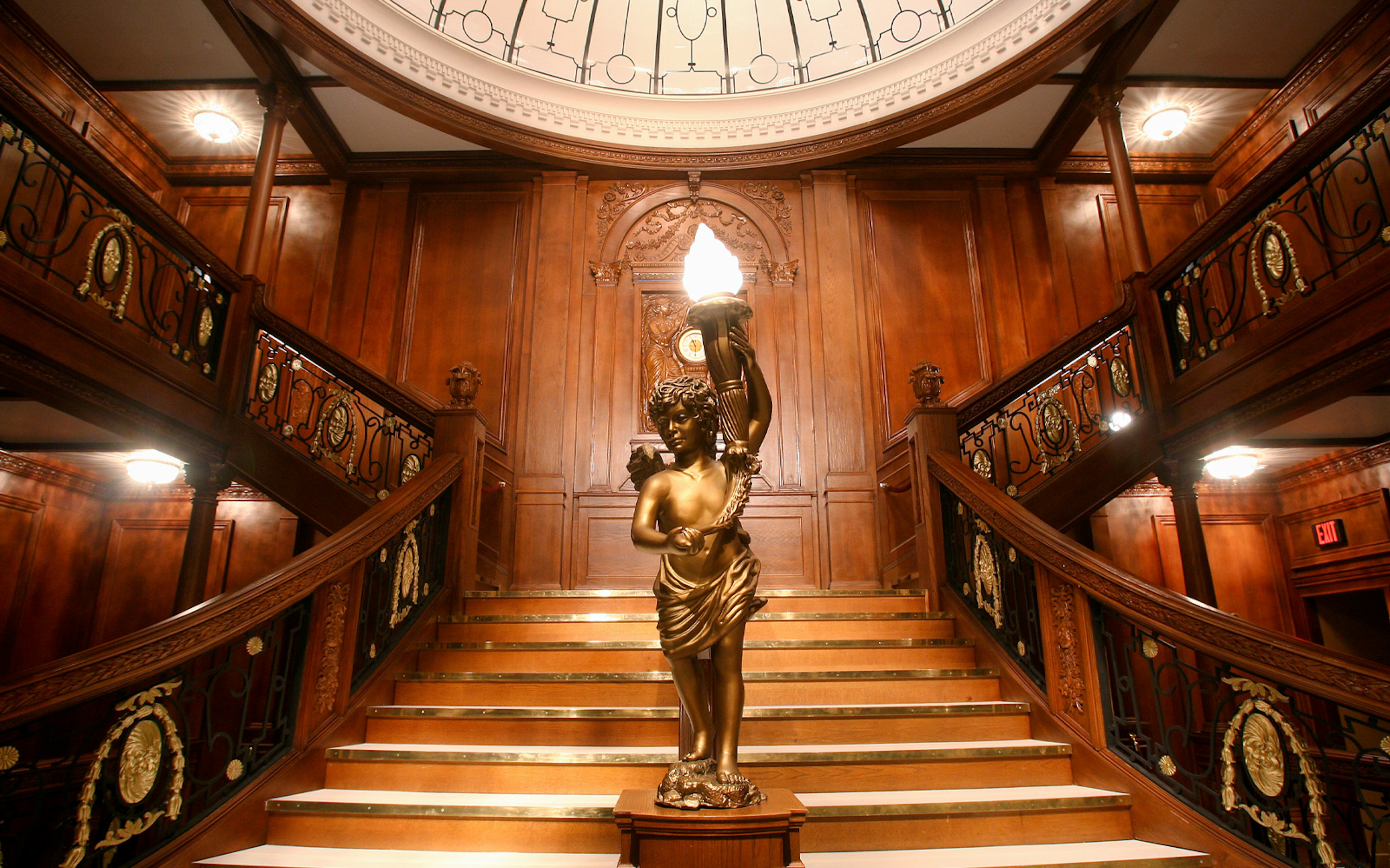
Grand Staircase
Feature type: Full-scale room recreation
This is the exhibit’s biggest visual set piece, and it’s where most people stop longest for photos. What makes it worth more than a quick snapshot is the way it sets the tone for the ship’s first-class world before the story turns darker. Most visitors rush the details — the carved woodwork, brass railings, and staged lighting are there to frame the contrast between luxury and loss.
Where to find it: Early in the main route, shortly after check-in and the opening galleries.
Little Big Piece
Artifact type: Original recovered hull section
This massive piece of Titanic’s starboard hull is the emotional and physical anchor of the visit. It lands hardest if you’ve already spent time with the passenger stories and smaller artifacts, because then the scale stops being abstract. Most people know it’s big; fewer realize it’s one of the largest Titanic sections ever recovered and the signature Orlando-only artifact.
Where to find it: In the final gallery, after the sinking and recovery sections.
The boarding pass experience
Story device: Passenger-based interpretation
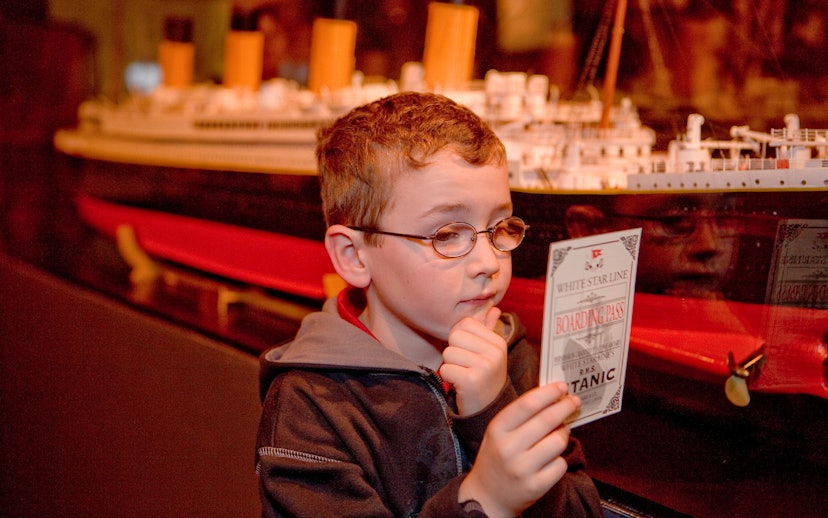
At entry, you’re handed a replica 1912 boarding pass with the name of a real Titanic passenger, and that small detail changes how the whole visit feels. Instead of drifting through displays, you start reading names, class differences, and survival details with more attention. Most people focus on whether their passenger lived, but the richer part is noticing how class, age, and location aboard shaped that outcome.
Where to find it: At check-in, before you enter the first main gallery.
The iceberg station
Interactive feature: Hands-on temperature exhibit
This is the exhibit’s simplest interactive moment, and it still works because it gives you a physical sense of the cold that shaped the disaster. You can touch an iceberg replica chilled to the kind of temperature associated with the North Atlantic that night, which makes the sinking feel less distant and more bodily real. Many visitors snap the photo and move on too quickly without reading the nearby context panels.
Where to find it: In the later middle section, near the sinking narrative galleries.
The personal artifact galleries
Collection type: Recovered objects and personal effects
The side galleries are where the exhibition becomes more than a replica-room attraction. You’ll see china, tools, jewelry, clothing, and personal items that connect the ship’s scale to individual lives, and that’s what gives the visit its emotional weight. Most people move too fast here because the objects are smaller and less theatrical than the staircase, but this is where the storytelling gets strongest.
Where to find it: Throughout the central galleries between the recreated rooms and the finale.
The first-class room recreations
Experience type: Immersive interior reconstruction
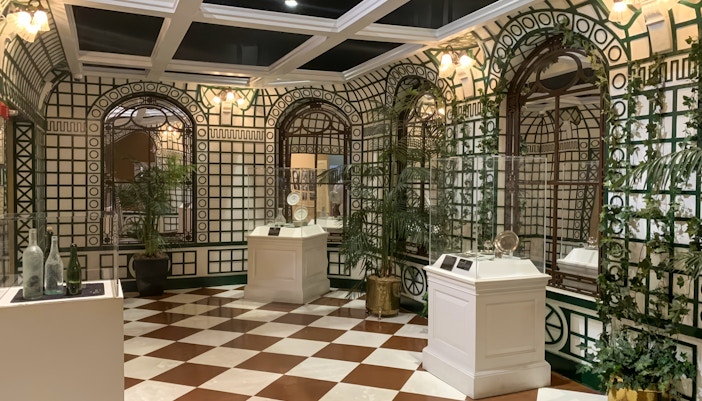
These rooms show how Titanic sold itself as a floating luxury hotel, and they help explain why the loss felt so shocking at the time. Beyond the photo appeal, they’re useful for understanding class differences onboard and the kind of world many passengers thought they were sailing into. Visitors often stop at the obvious pieces and miss how the furnishings, layout, and lighting are designed to build that contrast.
Where to find it: Clustered through the early and mid-route galleries, around the Grand Staircase section.
Facilities and accessibility
- 🎟️ Check-in: Every visit begins with a 1912-style boarding pass, so keep it with you because the passenger reveal at the end is part of the experience.
- 👨🏫 Tour desk: Artifact Specialist guided tours are available as an add-on if you want more depth than the self-guided labels provide.
- 🥽 VR experience: A separate-ticket virtual reality add-on is available on-site for visitors who want more than the standard gallery route.
- 🎭 Special event space: The venue also hosts Titanic Dinner Gala and themed tea events on select dates, which can affect how evening admission feels.
- 📸 Photo spots: The Grand Staircase, promenade-style sets, and iceberg station are the easiest places for photos without blocking artifact cases.
- 🛗 Elevators and ramps: The standard visitor route is supported by ramps and elevator access, which helps if you’d rather avoid stairs.
- 🚪 Indoor layout: This is an enclosed, museum-style visit, so it’s best approached as one continuous walk-through rather than a stop-and-start attraction.
- ♿ Mobility: The exhibition is ADA-accessible via ramps and elevators, but it still involves a standing-heavy museum route through darker rooms and tighter replica spaces.
- 👁️ Visual impairments: The standard visit is strongly visual, with display text, lighting, recreations, and artifact cases doing most of the interpretive work.
- 🧠 Cognitive and sensory needs: Weekday mornings are the easiest low-stimulation window, while the sinking-related rooms feel darker, louder, and more emotionally intense than the opening galleries.
- 🔊 Live interpretation: Costumed staff and guided add-ons can add atmosphere and context, but they also add spoken sound in relatively enclosed gallery areas.
- 👨👩👧 Families and strollers: The route is easier with a compact stroller than a wide one, and the ramp-and-elevator setup is more manageable than many historic-house-style museums.
- 🚶 Pacing: Because the route is mostly linear, it helps to pause in quieter artifact sections if anyone in your group needs a reset before the finale.
This works well for school-age kids who like stories, objects, and a little theatrical atmosphere more than hands-on science-style interactivity.
- 🕐 Time: Around 60–90 minutes is realistic with younger children, and the boarding pass, staircase, iceberg, and hull piece are the easiest sections to prioritize.
- 🏠 Facilities: The indoor, compact route makes this easier than a large Orlando attraction day, especially if you want something with less walking than a theme park.
- 💡 Engagement: Let your child follow the passenger on their boarding pass from start to finish, because that turns the galleries into a story instead of a series of display cases.
- 🎒 Logistics: Bring only what you want to carry comfortably for 2 hours, and aim for a weekday morning so kids can actually see the displays without crowding.
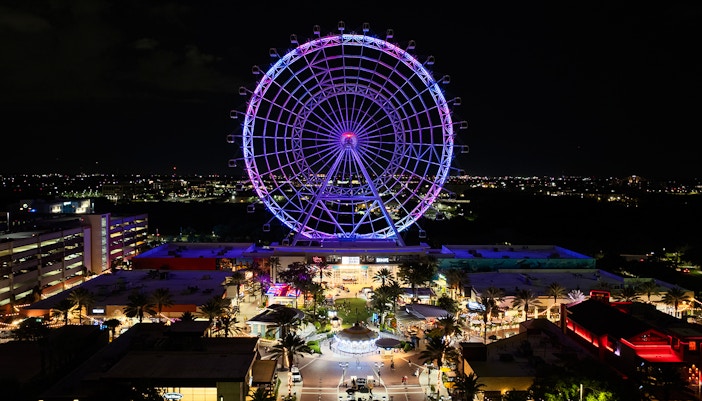
- 📍 After your visit: The Wheel at ICON Park is an easy follow-up if you want one more family-friendly activity without moving the car.
Rules and restrictions

What you need to know before you go
- Entry requirement: A standard admission ticket covers the self-guided exhibition, children aged 4 and under enter free, and children aged 5–11 qualify for reduced pricing.
- Bag policy: Bring only what you want to carry comfortably through the full indoor route, because this isn’t a stop-and-drop attraction with lots of spare space in the galleries.
- Re-entry policy: Plan this as one continuous visit, because stepping out mid-route breaks the flow of the passenger story and can disrupt any timed add-ons you booked.

Not allowed
- 🖐️ Touching exhibits: Touch only the designated interactive elements, such as the iceberg display, because the original artifacts and staged interiors are there to be viewed, not handled.
Photography
Casual photos are part of the visit, especially in the recreated rooms and at the iceberg and staircase set pieces. The practical distinction is simple: treat the immersive rooms as photo-friendly, but slow down and follow staff guidance around artifact cases, darker galleries, and special-event setups. Flash-heavy setups, bulky tripods, and drawn-out photo sessions make the route harder for everyone else in a compact indoor exhibition.
Good to know
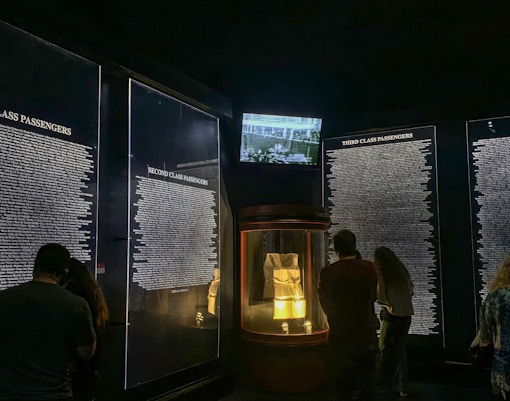
- Boarding pass reveal: Don’t lose the passenger card you receive at entry, because the final room depends on it more than most first-time visitors expect.
- Pacing: The exhibit is compact, but the emotional payoff comes late, so don’t burn all your time on the first photo stop and rush the artifact galleries.
Practical tips
- Booking and arrival: Book a few days ahead if you’re visiting during school breaks, holiday weeks, or a Friday–Saturday evening, because special events and regular admission can squeeze the same time window.
- Pacing: Save your attention for the middle artifact galleries, not just the staircase entrance, because that’s where the passenger stories build the context that makes the finale work.
- Crowd management: Weekday mornings are the sweet spot here, since the galleries are compact and the recreated rooms feel much more immersive when you’re not waiting behind photo lines.
- What to bring or leave behind: Bring a small bag and keep your hands free for photos, because this is a stand-and-read museum route with staged interiors rather than a sit-down attraction.
- Add-ons: If you’re tempted by VR or a guided add-on, build that decision in before you arrive so you don’t spend the first part of your visit debating upgrades in the lobby.
- Food and drink: Eat before you go or plan a proper meal after, because the visit is short enough to do in one stretch and the surrounding ICON Park area gives you better options than interrupting your flow.
- Photo strategy: Take your big staircase photos early, then put the phone away for at least one gallery, because the smaller personal artifacts are what most visitors remember later.
What else is worth visiting nearby

Commonly Paired: SEA LIFE Orlando Aquarium
Distance: Same entertainment complex — short walk
Why people combine them: This is the smoothest family add-on if you want a second indoor activity nearby without adding more driving to your day.

Commonly Paired: Madame Tussauds Orlando
Distance: Same entertainment complex — short walk
Why people combine them: Both are compact, indoor, and easy to stack in one outing, especially if you want a lighter, photo-driven stop after the heavier Titanic storytelling.
Eat, shop and stay near Titanic: The Artifact Exhibition
- On-site: The exhibition itself is better treated as a 1.5–2 hour museum visit than a meal stop, so it makes more sense to eat before or after in the surrounding ICON Park area.
- ICON Park restaurants: Short walk, International Drive; best if you want the simplest pre- or post-visit meal without moving the car.
- International Drive quick-service spots: Short drive, International Drive; useful if you want something fast before a timed entry and don’t want a full sit-down meal.
- International Drive sit-down dining: Short drive, International Drive; better for after the exhibit, when you’ve finished the full route and don’t need to watch the clock.
- 💡 Pro tip: Don’t eat right before a busy weekend afternoon slot if you care about photos — get inside first, then take your time over dinner once you’re done with the compact galleries.
- Exhibition souvenirs: Most exhibit-specific shopping is tied to the end of the visit, so this works best if you want memorabilia connected directly to the Titanic story.
- ICON Park retail: The surrounding complex is better for casual browsing after the museum than for planning a dedicated shopping stop.
If you’re building a short Orlando trip around attractions on International Drive, yes — this area is convenient, busy, and easy to navigate without committing to a full theme-park schedule. It works especially well if you want to stack indoor attractions, dining, and evening entertainment in the same corridor. If your trip is mostly about central Orlando neighborhoods or park-heavy resort time, this is more of a day-visit zone than the best long-stay base.
- Price point: The area skews mid-range to tourist-corridor pricing, with the best value usually coming from hotels that let you walk or rideshare easily along International Drive.
- Best for: Short stays where you want low-friction access to multiple attractions, dining, and evening options without a lot of cross-city travel.
- Consider instead: Stay near Universal Orlando Resort for a park-first trip, or downtown Orlando if you want a less tourist-heavy base with better city access.
Frequently asked questions about visiting Titanic: The Artifact Exhibition
Most visits take about 1.5–2 hours. That’s enough time to move through the recreated rooms, artifact galleries, iceberg station, and final hull-piece gallery at a comfortable pace. If you read every label, take lots of photos, or add VR or a guided tour, you could spend closer to 2.5 hours.
Booking ahead is the safer move, especially during school breaks, holiday weeks, and busier weekend afternoons. This isn’t usually the kind of Orlando attraction you need to lock in months ahead, but buying before you go helps you avoid last-minute friction and gives you better control over where the visit fits in your day.
Arriving about 10–15 minutes early is usually enough. The exhibit is compact, but you still need time to park, walk in from the surrounding complex, and check in before starting the route. Give yourself a little more buffer on weekends, when International Drive traffic and nearby attractions can slow the last part of your arrival.
Yes, but you’ll want to keep it small and easy to carry. The route is an indoor museum-style walk-through with recreated rooms and artifact cases, so a bulky bag becomes annoying faster than you expect. A small day bag works better if you’re also planning photos and don’t want to feel crowded in tighter spaces.
Yes, casual photos are a natural part of the visit, especially in the recreated rooms and at the staircase and iceberg displays. The practical rule is to stay aware of staff guidance and other visitors in the tighter gallery sections. Large photo setups slow down the route much more here than they would at a bigger attraction.
Yes, and small groups work especially well because the visit is compact and easy to follow together. Larger groups should still plan their timing carefully, since the recreated rooms and artifact cases can feel crowded once everyone stops at the same point. Guided add-ons make more sense if your group wants shared context rather than reading separately.
Yes, especially for school-age children who like stories, objects, and a few interactive moments. The boarding pass, staircase, iceberg station, and final reveal give younger visitors clear anchors through the visit. Very young children may enjoy the visuals, but the experience is more narrative and museum-like than hands-on.
Yes, the exhibition is ADA-accessible via ramps and elevators. That makes the main route manageable for many visitors with mobility needs, though it’s still a standing-heavy experience with darker rooms and tighter replica spaces. If you prefer a slower pace, weekday mornings are the easiest time to visit.
Yes, there are plenty of places to eat in the surrounding International Drive and ICON Park area. Most people do better eating before or after, since the exhibit itself is short enough to do in one stretch and feels more coherent as a continuous visit. That also keeps you from interrupting the passenger-story flow mid-visit.
No, the VR experience is treated as an extra add-on rather than part of the base ticket. Standard admission covers the main exhibition only, including the artifacts, recreated spaces, and passenger-story route. Add VR only if you want an extra immersive layer beyond the core museum experience.
The biggest mistake is skipping too quickly from the staircase photo stop to the final hull-piece gallery. The smaller artifact rooms and passenger-story sections are what give the ending its emotional weight. If you only chase the obvious photo moments, you’ll miss the part of the visit that actually stays with most people.